Cloud, AI and 5G Boost Drone Communication Power
Published: 3 Sep 2025
Drone communication systems are becoming a hot trend in today’s tech world. From agriculture to defense, people use drones for tasks that save time and money. The way drones talk to each other and to ground stations is changing fast. With the rise of 5G and cloud-based networks, drones can now share data in real time. This trend is not just about speed. It also makes drones smarter and safer to use. Businesses that adopt modern drone communication systems stay ahead. They can handle more complex jobs and improve efficiency. The future of drones depends on strong communication systems.
What Are Drone Communication Systems
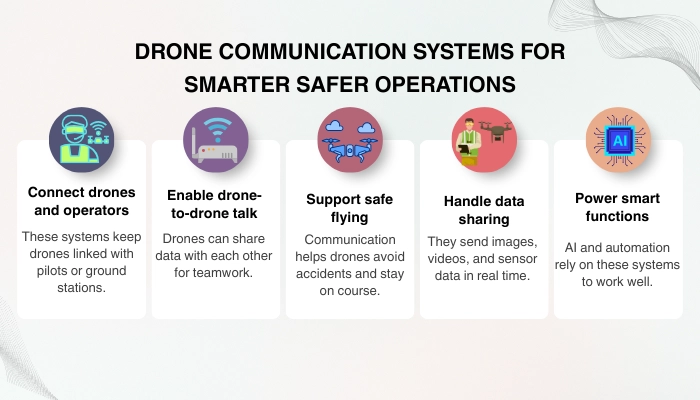
Drone communication systems are the methods and tools that allow drones to share information. They make sure drones stay connected to ground stations, operators, and sometimes even other drones. Without these systems, drones cannot fly safely or perform smart tasks.
The Concept of Drone Communication
Drone communication is the process of drones talking through signals. It allows them to follow human commands, send back data, and work together safely in the air.
Controller to Drone : Pilots send commands like “fly higher” or “turn left,” and the drone follows in real time.
Drone to Ground Station : Drones send back data such as location, altitude, battery life, or live video feed.
Drone to Drone : In advanced systems, drones can talk with each other to avoid collisions or work together on tasks.
Key Role of Communication : Without a clear and strong signal, drones cannot fly safely or complete tasks properly.
How Drone Communication Works in Real Life
A good way to understand this is by looking at delivery drones. These drones need strong communication signals to work smoothly.
Safe Navigation : Signals help drones avoid trees, buildings, and other obstacles during flight.
Package Drop Accuracy : The drone needs exact instructions from the ground to drop a package at the right spot.
Live Updates : The system sends live data to track the package, ensuring customers know where it is.
Emergency Handling : If something goes wrong, signals let the drone return home or land safely.
Core Parts of Drone Control Systems
Drone control systems are like the nervous system of a drone. They connect the pilot, the drone, and the data. Each part has its own role, and together they make sure the drone flies safely and does its job well.
Ground Control System
The ground control system acts like the main hub for drone operations. It’s where the operator monitors and controls the drone during flight
Main Command Hub : The ground control system is the base station that manages flights. It sends instructions and receives data from the drone.
Live Monitoring : Operators can see drone location, speed, and battery status in real time.
Mission Planning : Routes and tasks are uploaded before takeoff. The drone follows these plans with accuracy.
Example : Farmers use ground control to track drones that scan crops, giving them live health reports of their fields.
Onboard Communication Hardware
This is the tech inside the drone that helps it stay connected. It includes antennas, sensors, and chips.
Antennas : Drones use antennas to stay connected with controllers and satellites. Without them, communication would break down.
Sensors and Chips : These small parts collect flight data like speed, position, and altitude, then send it back to the operator.
Navigation Support : Hardware ensures the drone knows its exact path, avoiding obstacles and staying on course.
Real-Time Updates :Information from sensors is shared instantly, which helps drones adjust quickly during flight.
Operator Interface
The operator interface is the tool the user holds or uses to fly the drone. It can be simple like a remote or advanced like a laptop system.
Remote Controllers : Standard hand-held remotes let pilots guide drones with joysticks and buttons.
Laptops and Tablets : Professionals often use laptops with special software to control advanced drones.
Mobile Apps : Many hobby drones connect through phone apps, making them easy for beginners.
Example : A hobby pilot can launch, fly, and land a drone right from a smartphone app with simple taps.
Drone Network Connectivity
For a drone, staying connected is like having a steady lifeline. Strong network connectivity makes sure drones can fly smoothly, share data in real time, and follow commands without delays. Different types of networks help drones perform in various situations.
Types of Connectivity
Drones rely on different networks to stay connected. Each type plays a unique role in flight and data sharing.
Radio Signals : The most common way drones connect to controllers. They offer a simple and reliable link for short- to medium-range flights.
GPS : Global Positioning System helps drones know their exact location. It is essential for navigation, mapping, and returning home safely.
Wi-Fi : Many small drones use Wi-Fi to connect with phones or tablets. It works well for hobby flying but has a shorter range.
Satellite Links : Satellites give long-range connectivity, making it possible to fly drones beyond the line of sight. Useful for defense, shipping, and remote surveys.
5G Networks : The newest and fastest option. With 5G, drones can share large amounts of data instantly, making them smarter and more efficient.
Why It Matters
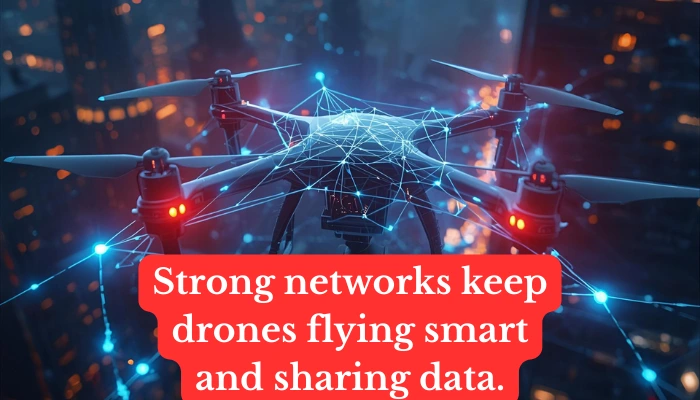
A drone is only as good as its connection. Strong networks keep flights safe and data flowing smoothly.
Safety First :A strong connection helps drones avoid accidents by following commands without delay.
Smooth Data Sharing : Real-time updates let operators make quick decisions during missions.
Reliable Coverage In large fields or remote areas, GPS and 5G keep drones connected over long distances.
Example : Agriculture drones rely on GPS and 5G to scan crops, send live images, and guide farmers on irrigation or spraying needs.
Drone Remote Control Frequency
Every drone runs on a drone controller signal frequency to stay linked with its controller. Think of frequency as the language drones use to listen and respond. Choosing the right one affects how far and how smoothly a drone can fly.
Common Frequencies
Drones mostly use two frequency bands: 2.4 GHz and 5.8 GHz. Each has its own strengths.
2.4 GHz : This is the most common frequency. It gives a longer range and stronger signal, making it great for distance flights. However, it may be slower in response time.
5.8 GHz : This frequency is faster and offers quick response, which is ideal for activities like racing. The downside is that its range is shorter compared to 2.4 GHz.
Range vs. Speed : If you need long-distance flights, 2.4 GHz works better. If you need fast reactions and less delay, 5.8 GHz is the right choice.
Practical Uses
Different drone activities need different frequencies.
Racing Drones : Racing drones use 5.8 GHz because pilots need instant response while flying at high speeds.
Delivery Drones : Delivery drones rely on 2.4 GHz since they need stable long-range connectivity to travel over larger areas.
Hobby Drones : Many hobby drones allow switching between the two, giving users flexibility based on distance or speed needs.
Drone Signal Interference Challenges
Even with strong communication systems, drones can face problems when signals are blocked or disturbed. This is called signal interference, and it can affect flight safety, performance, and data accuracy. Understanding it helps operators prevent accidents and keep drones working smoothly.
What Is Interference
Interference happens when a drone’s signal is blocked, disturbed, or weakened. This makes it hard for the drone to follow commands or send data back.
Simple Meaning : Interference happens when the communication link between a drone and its controller is disrupted.
Impact on Drones : The drone may not respond properly, lose connection, or in some cases, crash.
Why It Matters : Clear signals are critical for safe flights, especially in busy or sensitive areas.
Causes of Interference
Many things can disturb drone signals.
Crowded Wi-Fi Networks : Too many devices using the same frequency can weaken the drone’s signal.
Tall Buildings and Obstacles : Concrete walls or skyscrapers block signals and reduce range.
Other Drones or Devices : When multiple drones or electronics operate nearby, signals can overlap and cause confusion.
Bad Weather : Strong winds, rain, or storms can disturb signals and reduce communication quality.
Solutions to Signal Interference
Even though interference is common, there are simple ways to reduce its impact and keep drones flying safely.
Frequency Hopping : Modern drones can switch between channels automatically to avoid crowded signals. This keeps the connection steady.
Stronger Antennas : Upgrading or using high-gain antennas improves signal strength, allowing drones to stay connected even in busy areas.
Choosing Better Flying Zones : Flying in open spaces, away from tall buildings or heavy Wi-Fi traffic, reduces the chance of signal loss.
Weather Awareness : Checking weather forecasts before flights helps avoid storms or conditions that may disturb signals.
Drone-to-Drone Communication
Drone-to-drone communication is an advanced feature where multiple drones connect directly with each other. Instead of depending only on a ground station, they share data and commands among themselves. This teamwork helps drones perform bigger and more complex tasks smoothly.
Meaning
Drone-to-drone communication is when multiple drones share data directly with each other. Instead of relying only on a ground station, they talk as a team to complete tasks.
Direct Sharing : Drones exchange information like position, speed, or camera data with one another.
Teamwork in Flight : They coordinate without needing human input for every small move.
Smart Collaboration : This makes it possible for a group of drones to act like a single, organized unit.
Benefits
Working together makes drones faster and more efficient.
Faster Missions : Multiple drones can divide tasks, reducing the time needed to finish a job.
Smart Coordination : Communication ensures drones don’t collide and stay in proper formation.
Better Coverage : Working together, they can cover larger areas that a single drone cannot handle.
Higher Efficiency : Teams of drones save energy and resources by working in sync.
Cloud-Based Drone Communication
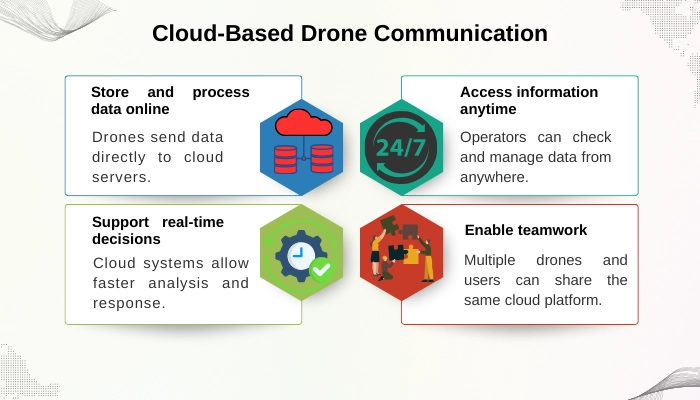
Cloud-based drone communication means drones connect to the internet and send their data to cloud servers. Instead of keeping information only inside the drone, the cloud stores it, processes it, and makes it available anywhere. This makes drones smarter and more useful in real-time.
What It Is
Cloud-based drone communication means drones send and store their data directly in the cloud. Instead of saving everything on the device, the data goes online for quick access.
Data Transfer : Drones send pictures, videos, or sensor readings directly to the cloud.
Storage : The cloud keeps all the data safe and easy to access.
Processing : Advanced tools in the cloud analyze the data quickly.
Key Benefits
Using the cloud makes drone operations faster and smarter.
Real-Time Insights : Data is available right away for decision-making.
Safe Storage : Large files are stored online without filling up the drone’s memory.
Easy Analysis : Cloud tools process data into maps, reports, or alerts.
Example Use : Farm drones upload crop images to the cloud, and software instantly creates health reports for farmers.
Future of Drone Communication Systems
Drone communication is moving fast. New technologies like AI, 5G, and satellites are shaping how drones will fly, connect, and work together in the future. These upgrades promise safer skies, faster responses, and smarter missions.
AI and 5G
AI and 5G will change how drones communicate and make decisions.
Smarter Drones : AI helps drones recognize objects, avoid obstacles, and choose better routes.
Faster Speeds : 5G networks allow instant data transfer with almost no delay.
Real-Time Decisions : Together, AI and 5G make drones quicker and more reliable in live situations.
Satellite Support
Satellites will make long-range drone flights easier and safer.
Beyond Line of Sight : Drones can fly far without needing to see the operator.
Global Coverage : Satellites keep drones connected even in remote areas.
Stronger Links : Fewer chances of losing signals during long missions.
Industry Impact
Better communication will transform how industries use drones.
Safer Flights : Reliable signals reduce crashes and errors.
Bigger Networks : Multiple drones can work together as a connected fleet.
More Autonomy : Drones will need less human control and can handle tasks on their own.
New Applications : From large-scale delivery to disaster management, industries will expand drone use.
Conclusion
Communication is the backbone of drone success. Without strong links, drones cannot fly safely, share data, or complete missions.
As technology grows, better systems will bring smarter, safer, and more reliable drones. From AI-powered decisions to 5G speed and satellite reach, the future of drone communication looks bright.