Strong Drone Control Systems Make Flying Easier and Safer
Published: 4 Sep 2025
Flying a drone looks easy, but controlling it is not always smooth. Many people face problems like signal loss, poor battery use, or even crashes. These issues usually happen when the drone control system is weak or outdated. The good news is that modern drone control systems solve these problems. They help drones fly safely, stay connected, and respond quickly to commands. Whether you are using drones for farming, delivery, or filming, the right system makes all the difference. Strong control means safe flights, better performance, and less stress for the user.
What Is a Drone Control System
A drone control system is the brain of the drone that guides and manages its flight. It makes sure the drone stays stable in the air, responds quickly to commands, and flies safely from takeoff to landing. Just like a car’s steering system helps drivers stay in control on the road, the control system helps drones move smoothly in the sky. Without it, drones would lose balance, drift off course, or even crash. In short, drone control systems make flying simple, safe, and reliable for both hobby users and industries that depend on drones.
Core Functions of Drone Control Systems
The main functions of control systems are what make flying a drone safe, smooth, and reliable. These functions ensure the drone can handle different situations while following commands accurately.
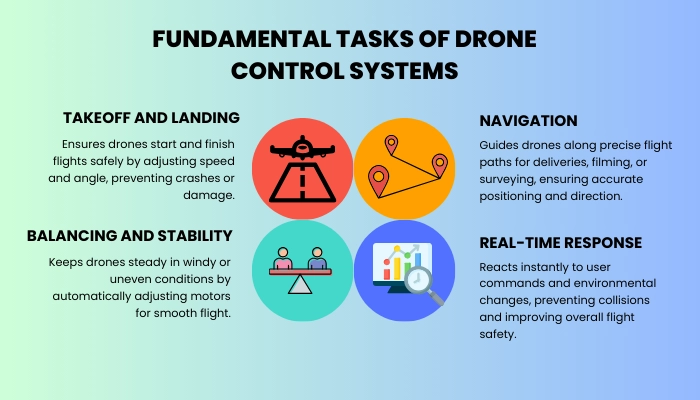
Takeoff and Landing : The control system manages a safe start and finish for every flight. It adjusts the drone’s speed and angle during takeoff and landing, reducing the risk of crashes or damage.
Balancing and Stability : Even in windy or uneven conditions, the system keeps the drone steady. Sensors detect shifts in position and automatically adjust the motors to maintain balance.
Navigation : Drone control systems help the drone follow precise flight paths. Whether it’s a set route for delivery or a moving subject for filming, the system ensures accurate direction and positioning.
Real-Time Response : The system reacts instantly to user inputs or environmental changes. Quick responses prevent collisions, improve control, and make flying safer for both hobbyists and professionals.
Types of Drone Control Systems
UAV Control Systems come in different types, each designed to suit specific needs and skill levels. Choosing the right type helps improve safety and flight performance.
Manual Control : In this system, the user operates the drone entirely with a remote controller. It gives full control over movement and speed, making it ideal for hobbyists who enjoy hands-on flying. However, it requires skill and attention to avoid crashes.
Automated Control : This system uses AI, sensors, and pre-programmed flight paths to manage the drone automatically. It is perfect for tasks like surveying, delivery, or filming, where precise and stable flight is needed without constant manual input.
Hybrid Systems : Hybrid systems combine manual and automatic control features. Users can take over when needed, but the drone can also operate on autopilot. This offers flexibility, safety, and convenience for both beginners and professional users.
Problems with Weak or Outdated Systems
Weak or outdated drone control systems can cause serious problems that affect both safety and performance. Understanding these issues helps users choose the right system for reliable flights.
Signal Loss Leading to Sudden Crashes : Older systems or weak controls may lose connection with the drone, causing it to drop unexpectedly. This can damage the drone and anything below it, making flying risky.
Poor Navigation and Unstable Flight : Without a strong control system, drones struggle to stay balanced or follow flight paths accurately. This results in drifting, wobbling, or difficulty maintaining altitude, especially in windy conditions.
Limited Range and Short Battery Life : Outdated systems may not optimize power use or signal range. This limits how far and how long the drone can fly, reducing efficiency for tasks like deliveries or aerial surveys.
Higher Risk of Accidents and Wasted Money : Weak systems increase chances of crashes, lost drones, or failed missions. Replacing broken drones and repairing damages can become expensive over time.
Next Gen Drone Control Solving Flight Problems
Modern drones have transformed the way drones fly, making them safer, smarter, and more reliable. These systems use advanced technology to solve the common problems seen in older models.
Advanced Sensors for Stability and Safety : Modern drones are equipped with sensors that detect wind, obstacles, and changes in position. These sensors automatically adjust the drone’s movement to keep it balanced and prevent crashes.
AI and 5G Improving Flight Control : Artificial intelligence and 5G networks allow drones to respond faster to commands and make real-time decisions. This helps drones fly accurately and handle complex tasks efficiently.
Longer Range and Better Connectivity : New control systems maintain strong connections over greater distances. Users can operate drones safely even in remote areas without losing signal.
Real-Life Example : Delivery drones can now reach remote locations smoothly, carrying packages over long distances without interruptions, thanks to these advanced control systems.
Drone Flight Control and Communication Systems
While drone control systems and drone communication systems are closely connected, they serve different roles in a drone’s operation. Understanding the difference helps ensure safer and more efficient flights.
Drone Control Systems : These manage the drone’s flight, keeping it balanced and stable while responding to user commands. They act like the brain that directs every movement of the drone.
Drone Communication Systems : These handle the exchange of signals and data between the drone and the controller or cloud networks. They allow real-time updates, such as location, battery status, and sensor information.
Working Together : For a smooth and safe flight, both systems must cooperate. Control systems guide the drone, while communication systems ensure it stays connected and informed, preventing crashes or signal loss.
Applications Across Industries
Drone control systems are used across many industries, helping businesses and professionals complete tasks more efficiently and safely.
Agriculture : Drones equipped with precise control systems can spray crops evenly, monitor plant health, and cover large fields quickly. This saves time, reduces labor, and improves yield.
Filmmaking : Stable flight is essential for capturing smooth aerial shots. Modern drone control systems allow filmmakers to record movies, events, and advertisements with professional-quality footage.
Delivery Services : Drones can transport packages safely and accurately. Strong control systems ensure they navigate to the correct address, avoid obstacles, and maintain a smooth flight path.
Defense and Security : Military and security operations rely on drones for surveillance, reconnaissance, and tactical missions. Reliable control systems are critical for precise movements and mission success.
Benefits of Using Strong Control Systems
Using strong drone control systems brings many advantages that improve safety, performance, and overall experience.
Safer Flights and Reduced Crashes : Advanced control systems help drones stay stable, respond quickly, and avoid obstacles. This lowers the risk of accidents for both beginners and professionals.
Better Efficiency and Longer Flying Time : Modern systems optimize flight paths and power use, allowing drones to cover more area and complete tasks faster without wasting energy.
Lower Repair and Replacement Costs : Fewer crashes and technical failures mean less money spent on fixing or replacing drones, saving time and resources.
Stress-Free Experience : Whether you’re a hobbyist or using drones professionally, reliable control systems make flying easier and more enjoyable, allowing users to focus on their mission instead of worrying about crashes.
Future of Drone Control and Communication Systems
The future of drone control and communication systems looks exciting, with smarter technology making drones more capable than ever.
AI-Driven Drones Making Smart Decisions : Drones will use artificial intelligence to analyze situations and make flight decisions automatically. This allows them to avoid obstacles, optimize routes, and complete tasks without constant human input.
Stronger Links with Communication Systems : Advanced communication systems will provide real-time data exchange, keeping drones connected to controllers, other drones, and cloud networks. This ensures smoother, safer, and more reliable operations.
Wider Use Across Industries : From healthcare delivery to smart city management, drones will expand into new sectors. Strong control and communication systems will enable efficient, large-scale operations, transforming how industries work.
conclusion
strong drone control systems are the key to safe, efficient, and stress-free flights. They keep drones stable, responsive, and reliable across different tasks and industries. Looking ahead, drones will continue to become smarter and more capable, especially as AI and advanced communication systems evolve. For anyone using drones, whether for hobbies, business, or professional work, the best results come from choosing modern control systems. Investing in up-to-date technology ensures better performance, fewer accidents, and a smoother flying experience every time.