Manage Drone Flights Smarter with AI-Powered Software
Published: 31 Aug 2025
In the near future, drones will dominate industries like delivery, farming, and infrastructure. Companies that rely on manual planning will fall behind. AI drone flight management software will become the standard for safe and efficient operations. This tech can already plan routes, analyze weather, avoid collisions, and save hours of manual work. The shift is clear: automation is the future of drone management. Businesses using AI now will lead tomorrow’s market. They’ll run smoother operations, cut costs, and improve safety. The smartest move you can make today is to invest in AI-powered flight planning before it becomes an absolute necessity.
The Problem with Manual Drone Management
Managing drones manually might seem fine when you have just one or two drones, but it quickly becomes a challenge as operations grow. Without automation, planning flights and keeping drones safe takes too much time and effort. Here’s why manual drone management is holding businesses back:
Slow Planning : Creating flight plans by hand is time-consuming. Operators have to study maps, weather reports, and no-fly zones themselves. This slows down operations and makes it hard to complete multiple flights in a single day.
High Risk of Errors : Humans make mistakes. A small error in a map coordinate or a missed obstacle can lead to crashes, delays, or even breaking aviation rules. Manual planning leaves more room for accidents that cost time and money.
Difficult to Scale : Handling a large number of drones manually becomes overwhelming. Coordinating multiple missions, battery swaps, and route changes is nearly impossible without automation. Growth is limited when everything depends on manual control.
What is AI Drone Flight Management Software?
AI drone flight management software is a smart tool that helps plan, control, and monitor drone flights. Think of it as the brain of your drone operations. It processes data in real time, makes quick decisions, and keeps flights safe and efficient. Instead of manually mapping routes or tracking drones, this software automates most of the hard work. Here’s what it does:
Smart Flight Path Optimization : The software creates the best flight routes based on distance, terrain, weather, and no-fly zones. This saves battery life, reduces travel time, and ensures drones reach their destinations quickly and safely.
Real-Time Drone Monitoring : It tracks each drone’s location, battery status, and performance in real time. If a drone faces a problem, the system alerts operators or even takes action, like auto-landing or rerouting.
Advanced Data Analysis : AI collects data from cameras, sensors, and GPS to give detailed insights. This helps businesses improve operations, spot problems early, and make better decisions.
Decision-Making Like a Pilot : The software reacts to unexpected situations instantly, like sudden weather changes or obstacles. It acts like an experienced pilot, reducing the pressure on human operators.
Route Planning and Navigation
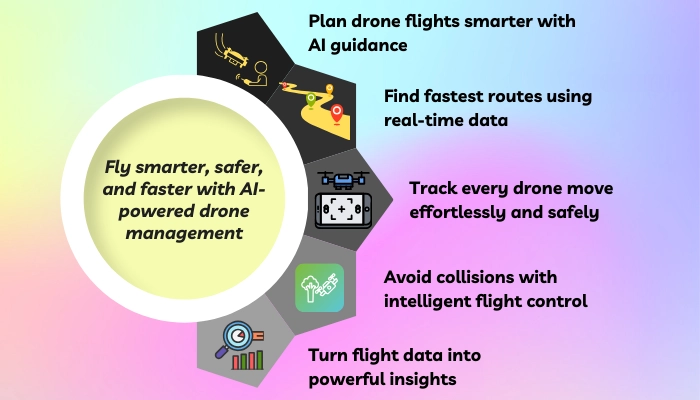
One of the biggest strengths of modern drone software is its ability to plan and adjust flight paths automatically. Instead of spending hours mapping routes manually, intelligent drone guidance systems calculate the safest and fastest paths. These systems study terrain, weather, and obstacles to ensure drones fly efficiently.
Smart Mapping : AI scans maps, flight zones, and terrain to create the most efficient routes. This saves battery life, reduces flight time, and ensures missions are completed faster.
Dynamic Adjustments : If the weather changes or a new obstacle appears, the software instantly updates the route. Drones can reroute mid-flight, keeping missions safe and on track.
GPS Integration : The system uses GPS signals to track the drone’s exact location in real time. This helps keep flights precise and easy to monitor from start to finish.
Sensor Support : AI combines data from onboard sensors like cameras, radar, and obstacle detectors. This allows drones to see their surroundings and navigate smoothly, even in complex areas.
Weather Analysis and Risk Prediction
Weather is one of the biggest challenges for safe drone flights. Strong winds, heavy rain, or sudden storms can put missions at risk. AI drone flight management software helps pilots avoid these dangers by analyzing real-time weather data and predicting possible risks before takeoff. This makes drone operations safer and more reliable.
Accurate Weather Forecasting : The software checks live weather reports, wind patterns, and temperature changes. It gives operators a clear view of flight conditions so they can plan safely.
Risk Detection : AI identifies risks like strong winds, rain, or restricted airspace ahead of time. This lets pilots change plans or delay flights to avoid accidents.
Automated Safety Alerts : The system sends instant warnings if conditions change mid-flight. Drones can land safely or reroute without human intervention.
Fewer Delays, Safer Missions : By automating weather checks, businesses save time and avoid costly mistakes. Flights become smoother, safer, and more predictable.
Collision Avoidance and Safety Features
Flying drones safely is easier with drones that use advanced sensors. AI systems detect obstacles and react instantly, reducing the risk of accidents.
Obstacle Detection : AI uses cameras and sensors to detect trees, poles, power lines, and other obstacles. The drone adjusts its path in real time to avoid collisions.
Fail-Safe Features : If a drone’s battery runs low or its signal drops, AI activates auto-landing or return-to-home features. This reduces the risk of crashes and lost equipment.
Real-Time Monitoring : The software constantly tracks drone performance, weather changes, and flight surroundings. It reacts instantly to potential dangers.
Peace of Mind : AI reduces stress for drone pilots by handling emergency responses. Operators can focus on mission goals instead of worrying about every detail mid-flight.
Time and Cost Savings for Businesses
AI-powered drones make operations faster and cheaper by handling tasks that used to take hours or even days.
Faster Planning : AI software creates flight paths automatically, cutting down hours of manual planning and scheduling.
Lower Repair Costs : Smart navigation reduces crash risks, which means fewer drone repairs and equipment replacements.
Less Manpower : Businesses need fewer workers for inspections or monitoring because drones can cover large areas quickly.
Industry-Specific Use Cases
AI drone technology is changing how different industries work, making tasks faster, safer, and more efficient.
Agriculture Support : Farmers use drones to check crop health, spray fields, and track yields to improve harvests.
Smarter Deliveries : AI optimizes routes for delivery drones, helping packages arrive faster and with fewer delays.
Infrastructure Checks : Drones inspect bridges, powerlines, and pipelines, reducing the need for risky manual inspections.
Rescue Operations : AI mapping helps search and rescue teams deploy drones quickly, even in tough terrains and emergencies.
Scalability and Fleet Management
As businesses grow, managing multiple drones becomes a big challenge. Flight management software makes this easy by handling many drones at once. It gives operators a clear view of every drone in the air, helping them stay in control without stress.
Easy Multi-Drone Control : AI can plan and manage several drone missions at the same time. This saves time and keeps operations organized.
Real-Time Dashboards : The software shows live updates on each drone’s location, battery status, and flight progress. Operators can track everything from one screen.
Smart Scheduling : AI schedules flights and assigns drones to tasks automatically. This reduces downtime and increases productivity.
Scales with Growth : As a company adds more drones, the system adapts without becoming harder to manage. Businesses can expand operations confidently.
The Shift to Full Automation
The future of drone technology is moving toward full automation. This means drones will fly, navigate, and complete missions with little to no human input. AI will play a key role in making skies safer and operations smoother. Businesses that adopt these tools early will have a major advantage. Here’s what’s coming:
Fully Autonomous Drones : Drones will take off, plan routes, and land without any manual control. This will save time and reduce the need for constant monitoring.
AI Air Traffic Systems : Advanced AI systems will manage airspace, keeping drones safe as skies become busier. They will help prevent collisions and allow for smooth, large-scale drone operations.
Efficiency and Innovation : Companies using automation early will work faster, lower costs, and set new industry standards. They’ll be ready for the future while others struggle to catch up.
A New Standard : Full automation will become the norm, making drone technology more accessible and reliable for all industries.
Conclusion
AI drone flight management software is no longer a luxury. It’s becoming essential for businesses that want safe, efficient, and scalable drone operations. From smart route planning and weather analysis to collision avoidance and full automation, AI helps save time, cut costs, and reduce risks. Companies that adopt these tools early will lead the way, while others scramble to keep up. If you use drones for delivery, farming, inspections, or other industries, now is the time to act. Start exploring AI-powered tools today to stay ahead of your competition and prepare for a fully automated future.