How AI Drone Navigation Is Changing the Way We Use Drones
Published: 27 Aug 2025
Behind the scenes, AI navigation drones work like flying computers. Cameras, sensors, and processors collect live data to help them see and respond to their surroundings. When a drone flies through a busy area, AI decides the best route in seconds, avoiding poles, buildings, or trees. Engineers design these systems to keep flights stable and efficient while reducing human error. The magic happens through machine learning, where drones learn from every flight. While most people see a sleek machine in the air, inside is a complex system making hundreds of decisions every second to keep it safe and reliable.
What Is AI Navigation in Drones
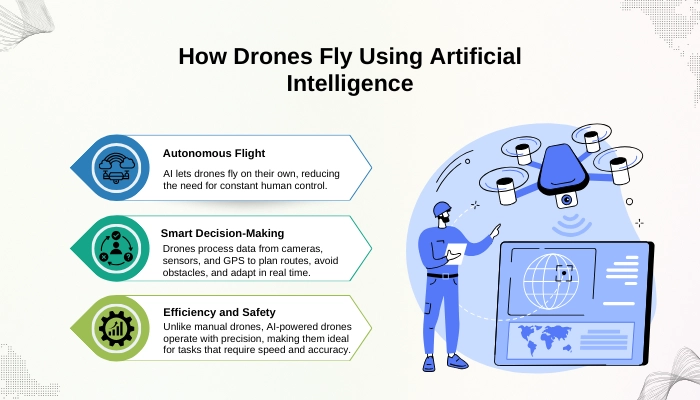
AI navigation in drones is the technology that lets drones fly on their own without constant human control. It uses artificial intelligence to process data from cameras, sensors, and GPS to understand the environment and make smart decisions. Instead of a pilot manually controlling every movement, AI helps the drone plan routes, avoid obstacles, and reach its destination safely. Manual drones depend fully on a person’s skills to operate, while AI-powered drones act like flying computers that can think, adapt, and respond in real time. This makes them safer, more efficient, and perfect for tasks that need precision and speed.
Key Hardware That Powers AI Navigation
AI navigation drones aren’t just flying toys, they are packed with hardware that lets them see, think, and fly smart.
Cameras and Visual Sensors
How drones capture real-time visuals to map surroundings.
High-resolution cameras: These cameras give drones a sharp, detailed view of their environment. They are crucial for spotting tiny obstacles like cables, thin branches, or uneven surfaces that low-quality cameras might miss. The extra detail also helps AI software create more accurate flight paths and record high-quality footage for analysis or delivery purposes.
Depth sensors: Depth sensors measure the exact distance between the drone and objects in its surroundings. They allow the drone to build a 3D model of the area, helping it see in all directions. This tech is vital for navigating tight spaces, avoiding collisions, and ensuring smooth landings.
Infrared cameras: Infrared imaging lets drones detect heat signatures and see in total darkness, fog, or smoke. This is especially important for rescue missions, night operations, and harsh weather conditions where normal cameras fail.
Wide-angle lenses: A wide-angle lens gives drones a much larger field of view, helping them monitor multiple directions at once. This reduces blind spots, improves obstacle detection, and speeds up AI decision-making because the drone gathers more visual data in fewer movements.
GPS and LiDAR
GPS provides precise location tracking, while LiDAR creates detailed 3D maps by measuring distances with laser pulses.
GPS modules: GPS gives drones precise global positioning, enabling them to follow pre-planned routes accurately, even over long distances and changing terrains.
LiDAR sensors: LiDAR Sensor fires rapid laser pulses to measure distances and build a detailed 3D terrain map, improving navigation accuracy in real-time.
Redundancy systems: GPS and LiDAR work together as backups, ensuring navigation continues safely even if one system fails mid-flight.
Indoor navigation: LiDAR enables accurate flying indoors or in GPS-denied areas by mapping surroundings in detail and preventing crashes.
Processors and Onboard Computers
Drones need powerful processors to handle navigation, real-time data processing, obstacle detection, and autonomous decision-making efficiently.
AI-ready chips: These specialized chips handle advanced machine learning tasks onboard, letting drones process navigation data instantly without cloud delays.
Edge computing: Edge computing enables drones to analyze data locally in real-time, reducing reliance on internet connectivity and boosting flight responsiveness.
High-speed processors: Powerful processors let drones make split-second calculations, avoiding obstacles, adjusting flight paths, and reacting quickly in unpredictable environments.
Thermal management: Efficient cooling systems protect processors and sensors from overheating, ensuring reliable performance during extended flights and demanding AI operations.
Battery and Power Systems
Efficient batteries power longer AI-driven flights, supporting real-time processing, sensors, and advanced navigation without frequent recharging.
High-capacity batteries: Large-capacity batteries give drones longer flight times, supporting energy-intensive AI tasks like mapping, scanning, and real-time obstacle detection.
Smart power management: AI-powered systems monitor battery levels, adjust power distribution, and extend flight duration by reducing unnecessary energy drain during missions.
Lightweight materials: Using lighter frame materials lowers energy consumption, allowing drones to carry advanced sensors and processors without sacrificing flight efficiency or time.
Backup power systems: Extra battery systems ensure drones stay airborne during emergencies, preventing sudden crashes or data loss in critical operations.
How Drones See the World
AI navigation drones rely on sensors and smart software to understand their surroundings. They continuously collect data, create maps, and make decisions to fly safely and efficiently.
Data Collection in Real-Time
Sensors like cameras, LiDAR, and GPS constantly gather information about the environment.
Drones detect objects, measure distances, and track movement in real time.
This live data allows drones to react instantly to obstacles or changes in flight conditions.
Continuous data collection ensures accurate navigation even in complex environments.
Mapping and Obstacle Detection
Drones create 3D maps of their surroundings using sensor data.
This helps them understand the distance between objects like trees, buildings, and poles.
Example: A drone flying through a forest can map the trees and avoid collisions automatically.
3D mapping allows drones to plan the safest and most efficient route every time.
The Role of Engineers in Drone Design
Engineers are key to making drones safe, smart, and reliable. They combine physics, materials, and programming to create drones that work well in the real world.
Structural Strength : Engineers choose strong materials and designs so drones don’t break in wind, rain, or rough landings. They test frames, arms, and landing gears to make sure everything holds together.
Safety Features : They add safety systems like automatic return, collision alerts, and emergency landing modes to keep drones and people safe during flight.
Flight Programming : Engineers write the software that controls the drone’s movement. This includes balancing, taking off, landing, and following flight paths accurately.
Smart Navigation : They program AI and algorithms so drones can detect obstacles, avoid collisions, and fly smoothly even in changing conditions.
Real-Time Decision Making
Drones need to think fast. Engineers equip them with tools to make smart choices in the air, so they stay safe and efficient.
Instant Route Planning : Drones analyze their surroundings and choose the safest path on the fly. They adjust routes if weather changes or obstacles appear.
Obstacle Avoidance : Sensors detect trees, wires, or birds. The drone quickly changes direction to avoid crashes without stopping mid-air.
Millisecond Decisions : Drones process thousands of data points every second. Tiny decisions, like tilting, slowing, or speeding up, happen in milliseconds to keep them stable.
Adaptive Flight : Drones learn from the environment. They can respond to wind gusts, moving objects, or sudden changes, making their flight smooth and reliable.
Benefits of AI Navigation
AI navigation transforms drones from simple flying devices into smart, reliable machines.
Safety Improvements
AI reduces human errors and accidents by continuously monitoring surroundings and making instant, precise flight decisions.
Stable Flight: Advanced sensors and processors maintain balance, even in windy or unpredictable conditions.
Emergency Handling: Drones can automatically return to base or land safely if something goes wrong.
Reduced Human Error: Pilots don’t have to react instantly; AI makes split-second decisions to prevent accidents.
Better Efficiency and Speed
AI is perfect for time-sensitive missions because it plans optimal routes and adapts instantly to changes.
Optimal Route Planning: AI calculates the fastest and safest flight paths automatically.
Real-Time Adjustments: If obstacles appear or conditions change, drones adapt instantly without stopping.
Multi-Tasking Ability: AI lets drones monitor multiple sensors and areas simultaneously, saving time.
Faster Missions: Less human intervention means deliveries, inspections, or surveys complete more quickly.
Cost Savings for Businesses
AI boosts efficiency in deliveries, agriculture, and inspections by ensuring accurate, fast, and reliable operations.
Reduced Damage Costs: Fewer crashes mean lower repair and replacement expenses.
Labor Savings: AI drones can operate with minimal human supervision, reducing staffing needs.
Efficient Resource Use: Precision in agriculture or inspections saves fuel, water, and time.
Higher Productivity: Businesses complete tasks faster, increasing output and revenue potential.
Applications of AI Navigation Drones
These drones are changing how industries work. They handle tough jobs faster, safer, and more efficiently than humans alone.
Agriculture and Farming
Farmers use drones in agriculture to monitor crops, gather essential data, and spray fields with precision.
Crop Health Checks : Drones scan large fields quickly and detect signs of disease or pests early.
Smart Spraying : They spray water, pesticides, or fertilizers only where needed, reducing waste.
Soil Analysis : Drones map soil conditions to help farmers plan better planting and irrigation.
Search and Rescue
AI drones save lives by quickly reaching places that are hard for people to access.
Fast Area Scans : Drones search large areas quickly and send real-time data to rescue teams.
Heat Detection :Thermal sensors help locate people in darkness, smoke, or dense forests.
Autonomous Navigation : AI guides drones through rough terrain without human control.
Supply Delivery : They drop essentials like water, medicine, or first aid to trapped people.
Infrastructure Inspections
AI drones keep cities and industries safe by spotting damage before it becomes a problem.
Bridge Checks : They inspect bridges for cracks, corrosion, or other risks without closing roads.
Powerline Monitoring : Drones fly along powerlines to find faults and prevent outages.
Pipeline Surveillance : They track leaks or damages in pipelines across remote areas.
High-Risk Access : AI navigation lets drones reach dangerous spots humans can’t easily access.
How AI Navigation Is Evolving
AI drone technology is advancing rapidly, with smarter software, stronger hardware, and safer regulations shaping the future of flight.
Smarter AI Models
AI is learning to think and act more like humans, making drones better at their jobs.
Improved Learning : Drones now use advanced algorithms to learn from past flights and get better over time.
Higher Accuracy : AI can detect objects and plan routes with precision, reducing mistakes.
Real-Time Decisions : They process data instantly, helping drones respond to sudden changes mid-flight.
Autonomous Missions : Drones can complete complex tasks without constant human control.
Better Hardware Integration
Modern drones pack more power into smaller devices, making them lighter and more efficient.
Smaller Sensors : Cameras, GPS, and other sensors are shrinking while capturing better data.
Faster Processors : Stronger chips allow drones to analyze information instantly during flight.
Longer Battery Life : Better batteries let drones fly longer without frequent charging.
Durable Builds : Lightweight, strong materials make drones safer in tough environments.
The Future of AI Navigation Drones
AI drones are evolving into intelligent, self-sufficient systems, shaping industries, cities, and daily life with automation and precision.
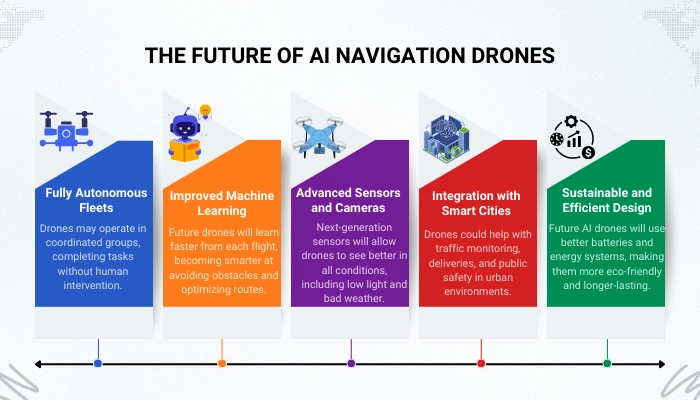
Fully Autonomous Drone Networks
Drones will soon fly, deliver, and manage themselves with less human involvement.
Self-Flying Fleets : Networks of drones will plan routes, avoid collisions, and complete missions without pilots.
24/7 Operations : These fleets will work day and night, offering nonstop services like deliveries and surveillance.
Smart Coordination : AI will connect multiple drones, letting them work together for large projects or events.
Real-Time Monitoring : Constant data collection will help improve safety and efficiency across industries.
AI in Everyday Life
Drones will become part of our daily routines, helping at home, in cities, and in business.
Home Assistance : AI drones could handle tasks like garden monitoring, roof inspections, or home security.
Urban Deliveries : Cities may rely on drones for quick deliveries of groceries, medicine, or urgent supplies.
Traffic Management : Drones will help monitor traffic and guide emergency vehicles through busy roads.
Event Coverage : Expect drones at concerts, sports games, and festivals for live coverage and safety checks.
Final Thoughts
AI navigation drones are no longer just gadgets; they are becoming powerful tools that reshape how we live, work, and move. With smarter AI, stronger hardware, and safer regulations, drones are ready to take on bigger roles, from delivering essentials to saving lives. As this technology continues to grow, expect drones to become as common and reliable as smartphones, driving a future built on speed, safety, and innovation.