Why Drone Obstacle Avoidance Sensors Are Key to Safe Flights
Published: 24 Dec 2025
A drone obstacle avoidance sensor is a smart safety feature that helps keep your drone safe in the air. It allows the drone to notice objects before hitting them. Trees, walls, poles, and buildings can appear without warning during a flight. These sensors detect danger early and help the drone slow down, stop, or change direction in time. Think of it like brakes in a car. When something comes too close, the system reacts fast. Different sensors work together to make these quick decisions. Beginners rely on it to avoid crashes. Professionals trust it for smooth shots in tight spaces. Flying in forests, cities, or indoors feels safer and more controlled. Want fewer accidents and more confidence? This sensor makes a real difference.
What Is a Drone Obstacle Avoidance Sensor
An obstacle avoidance sensor helps a drone fly safely by spotting objects before a crash happens. It works like extra eyes on the drone.
Drone obstacle avoidance sensor : A drone obstacle avoidance sensor is a small system that helps the drone see nearby objects. It checks the space around the drone while it flies. When something comes close, the sensor alerts the drone. This helps prevent sudden hits and damage.
How it helps with drone object detection : The sensor supports drone object detection by finding trees, walls, or poles early. It measures how far the object is from the drone. The drone then slows down, stops, or moves away. This happens in real time, not after the danger.
Why it acts as a core drone safety feature : This sensor is a key drone safety feature because it reduces crashes. It protects the drone, the camera, and people nearby. Beginners feel more confident, and experts get smoother flights in tight spaces.
avoiding trees during a low flight : Imagine flying low in a park. A tree branch appears suddenly. The drone obstacle avoidance sensor detects it fast. The drone stops before hitting the branch. That simple action saves the drone and your shot.
Why Drone Obstacle Avoidance Matters for Drone Flight Safety
Drone flight safety depends on how well a drone can sense danger around it. A drone safety sensing system plays a big role here. It helps the drone react before a crash happens.
How sensors prevent crashes and sudden stops : Obstacle sensors scan the area while the drone flies. They spot objects like walls or poles early. When danger comes close, the drone slows down or stops smoothly. This prevents hard crashes and sudden drops.
Why safe flying is hard without sensors : Without sensors, the pilot must watch everything at once. This is hard, especially at high speed or low height. Small objects are easy to miss. One mistake can damage the drone or hurt someone.
Flying near buildings or power lines : Picture a drone flying between buildings. Power lines are thin and hard to see. The obstacle sensor detects them in time. The drone changes direction and stays safe. That’s how sensors protect both the drone and its surroundings.
Types of Sensors That Help Drones Fly Safely
Drones use different sensors to understand their surroundings. Each sensor has a clear job. Together, these sensors help drones fly safely by avoiding danger and staying in control.
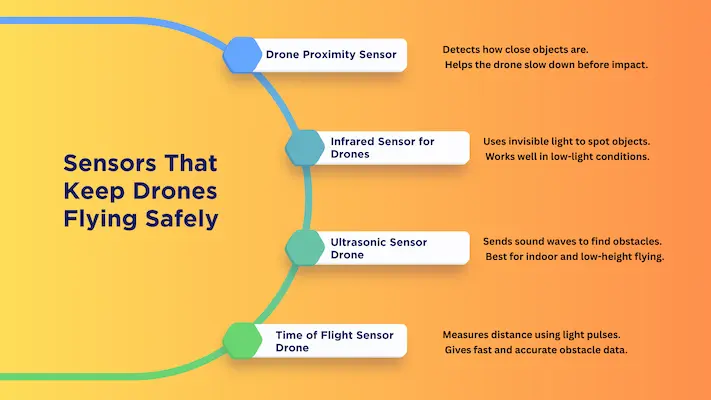
Drone Proximity Sensor : A drone proximity sensor checks how close an object is. It sends a signal and waits for it to return. The faster it comes back, the closer the object is. This helps the drone slow down before a hit.
Infrared Sensor for Drone : An infrared sensor for drones uses light we cannot see. It detects objects by reading heat or reflection. This sensor works well in low light. It helps drones spot walls or people during evening flights.
Ultrasonic Sensor Drone : An ultrasonic sensor drone sends sound waves into the air. When the sound hits an object, it bounces back. The drone reads the return time. This method works well indoors and near the ground.
Time of Flight Sensor Drone : A time of flight sensor drone sends a short pulse of light. It measures how long the light takes to return. This gives fast and accurate distance data. It helps drones react quickly in tight spaces.
How Drones Detect Objects in Real Time
Drones must react fast while flying. Real-time sensing helps them see danger and respond instantly. This is how drones stay safe in the air.
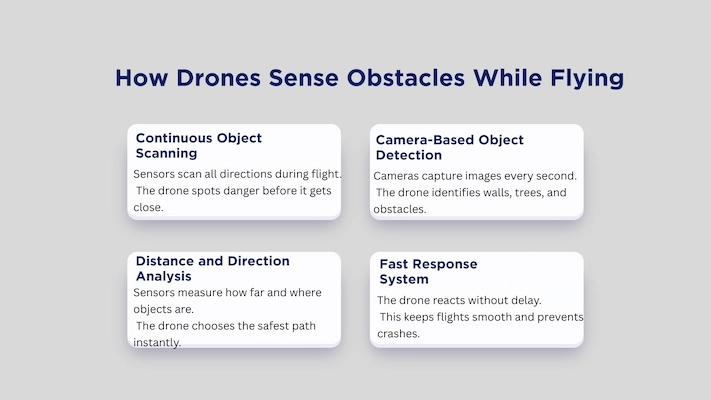
Continuous Object Scanning : Drone object detection runs all the time during flight. Sensors scan the space in front, below, and around the drone. When an object appears, the system measures distance and direction. The drone then decides to slow down, stop, or move away.
Role of camera-based sensing : Cameras act like eyes for the drone. They capture images many times each second. The drone reads these images to spot shapes like walls or trees. This helps the drone understand where it can fly safely.
Fast Response System : Quick response keeps the drone stable. When the drone reacts in real time, it avoids sudden jerks. This improves control and protects the drone. Faster decisions mean fewer crashes and smoother flights.
Optical Flow Sensor Drone and Stable Flying
An optical flow sensor drone helps a drone stay steady, especially when GPS is weak or unavailable. It reads patterns on the ground to keep the drone in control.
Tracks Ground Movement : This sensor tracks movement below the drone using a camera or light sensor. It measures changes in patterns to know if the drone is drifting. The system corrects the position automatically.
Holds Position Indoors : Indoors, GPS signals are weak or missing. The optical flow sensor steps in to keep the drone hovering in place. It stops the drone from drifting sideways or forward.
Enables Smooth Indoor Filming : Imagine flying a drone in a living room to capture footage. The sensor reads the floor and walls. Even without GPS, the drone hovers steadily. This allows smooth filming and safer indoor flights.
How These Sensors Work Together as a Safety System
Drones don’t rely on just one sensor. Multiple sensors work together to keep flights safe. They share data and help the drone react accurately.
Multiple Sensors Share Data : Sensors like infrared, ultrasonic, and time-of-flight send information to the drone’s brain. The drone combines these readings to understand its surroundings better. This prevents mistakes that could happen if only one sensor is used.
Backup Sensing Improves Safety : Backup sensors act as a safety net. If one sensor misses an object, another can detect it. This reduces crashes and improves control in tricky spaces.
Coordinated Sensor Action : A drone flying in a forest uses front sensors for trees, side sensors for branches, and bottom sensors for the ground. All sensors send data together. The drone avoids obstacles smoothly, keeping the flight safe and stable.
Who Needs Drone Obstacle Avoidance Sensors Most
Not every pilot uses obstacle avoidance sensors the same way. Some people benefit from them more than others.
Beginners and first-time drone pilots : New pilots often misjudge distance or speed. Sensors act like extra eyes. They prevent crashes and help beginners build confidence quickly.
Content creators flying in tight spaces : Filming indoors, between trees, or in crowded areas is tricky. Obstacle sensors keep drones steady and safe, so creators capture smooth, professional shots.
Commercial Pilots Needing Reliable Safety : Delivery, survey, and inspection drones operate in busy or complex areas. Reliable drone safety features help prevent accidents, protect expensive equipment, and ensure missions are completed safely.
Why Drone Obstacle Avoidance Sensors Are Important for Safe Flying
A drone obstacle avoidance sensor is essential for anyone who wants safe and smooth flights. It keeps the drone, its surroundings, and the pilot protected.
Fewer crashes and repairs : Sensors spot obstacles early, reducing collisions. This means less damage and fewer costly repairs.
Better confidence and smoother control : Pilots can fly with more confidence. The drone reacts automatically to obstacles, making flights smoother and easier to manage.
Safer flights in cities, forests, and indoor areas : Urban areas, tree-filled parks, or indoor spaces are tricky to navigate. Obstacle sensors detect dangers in real time, ensuring safer flights everywhere.
Conclusion
Drone obstacle avoidance sensors are essential for safe and confident flying. They help detect objects early, prevent crashes, and protect both the drone and surroundings. With sensors like infrared, ultrasonic, optical flow, and time-of-flight working together, drones stay stable indoors and outdoors. Beginners, content creators, and commercial pilots all benefit from smoother, safer flights. Investing in these sensors ensures smarter, worry-free flying.
FAQs
Yes, they are very helpful for beginners. Sensors act like extra eyes, reducing the risk of crashes. They also help build confidence while learning to fly.
Optical flow sensors read patterns on the ground to keep the drone steady. They are especially useful indoors where GPS may not work. This allows smooth hovering and safe filming.
Obstacle sensors greatly reduce crashes, but not all dangers can be avoided automatically. Pilots should still fly carefully and watch their surroundings. Sensors are an extra safety layer, not a complete replacement.
Multiple sensors share data with the drone’s brain. If one sensor misses an object, another can detect it. This coordinated system improves safety and prevents crashes in complex environments.