From Firefighting to Farming, Thermal Drones Lead Way
Published: 22 Aug 2025
Imagine losing a hiker in the mountains at night and finding them within minutes. That’s the surprising power of a thermal imaging drone. Unlike standard drones with cameras, these devices can see heat signatures even in total darkness. Many drones also rely on a GPS module to track exact locations, ensuring rescuers know precisely where the device is flying. What shocks most people is how accurate they are—spotting tiny differences in temperature from far above. Police, firefighters, farmers, and even energy companies now depend on them. It’s no longer just military tech; anyone can access it. The real surprise is how fast thermal imaging drones are changing rescue missions, safety checks, and even everyday tasks we once thought impossible.
What Is a Thermal Imaging Drone?
A thermal imaging drone is a drone equipped with a special camera that sees heat instead of light. This allows it to detect things that a normal camera or the human eye might miss.
Heat Detection : Every object gives off heat, even if we can’t see it. The thermal camera on the drone picks up this invisible heat and turns it into an image that shows warm and cool areas.
Different from Normal Cameras : Regular cameras only capture visible light. A thermal camera doesn’t need light at all—it reads temperature differences. For example, a person will stand out against cooler surroundings, even in the dark.
Night Vision Upgrade : Unlike night vision, which needs a little light to work, thermal imaging works in complete darkness. It can also see through smoke, fog, or dust, which makes it far more powerful in tough conditions.
Real-World Use : Because of this ability, thermal imaging drones are used in rescue missions, farming, building inspections, and firefighting. They don’t just take pictures—they give information that can save time, money, and even lives.
How Thermal Imaging Works
Thermal imaging may sound complex, but the idea is actually simple. Everything around us gives off heat, and thermal cameras can capture it.
Infrared Energy : All objects, whether living or not, release infrared radiation, which is another word for heat. Even something that feels cold to you is still giving off some heat.
Heat Detection :The camera on a thermal imaging drone senses this invisible radiation. Instead of showing a regular photo, it translates heat differences into a picture.
Color Display : Warmer areas show up in bright colors like red, orange, or yellow, while cooler spots appear in darker shades like blue or purple. This makes it easy to spot hot objects in cooler surroundings.
Simple Example : Imagine standing in a dark field at night. To the human eye, everything looks black. But on a thermal drone’s screen, your body glows brighter than the cold ground, making you easy to find.
Accuracy and Range
One of the most important things about a thermal imaging drone is how far it can see heat and how clearly it can separate tiny temperature changes. This makes the drone useful in many real-world situations.
Detection Distance : Thermal imaging drones can spot heat from hundreds of feet in the air. The exact range depends on the camera’s quality, but even from a high altitude, they can see a person, an animal, or a hot object on the ground.
Temperature Differences : These cameras can pick up very small changes in heat. For example, they can tell the difference between warm soil and a slightly cooler patch of ground. This helps in tasks like farming or spotting weak spots in buildings.
Clarity in Darkness : Because they don’t need light, the images stay clear even at night. A person or animal will glow against a colder background, making them easy to identify.
Rescue Missions
Thermal imaging drones have become powerful tools in search and rescue work. They help teams find people or animals quickly in places where it would normally take hours of searching. Here’s how they make a difference:
Finding Missing People : Whether it’s a lost hiker in the mountains, a child in the woods, or someone trapped after a disaster, thermal drones can detect their body heat even in total darkness.
Difficult Environments : Thick forests, rugged hills, or smoke-filled areas are hard for rescuers to search on foot. A drone can fly over these obstacles and give clear heat maps from above.
Faster Search Times : Instead of covering ground slowly, drones scan large areas in minutes. This reduces the time needed to locate someone, which can be life-saving in cold weather or dangerous conditions.
Safety for Rescuers : Sending a drone first means rescuers don’t have to put themselves at risk right away. They can plan the safest route once the drone identifies the missing person’s location.
Firefighting Applications
Heat-sensing drones are now an important part of firefighting. They give firefighters a view that the human eye and normal cameras cannot provide, especially in dangerous conditions filled with smoke and heat.
Detecting Hotspots : Even after flames are put out, small hidden fires may still burn under debris. A drone with a thermal camera can spot these “hotspots” quickly so they can be extinguished before they reignite.
Seeing Through Smoke : Thick smoke blocks regular cameras, but an infrared drone can cut through it. This helps firefighters see where the fire is spreading and where it is safest to move.
Supporting Firefighters : By mapping heat from above, a heat detection drone shows which areas are too hot or unstable. This allows teams to plan safe entry points, choose the right equipment, and protect lives while fighting the fire.
Police and Security
Infrared drones are becoming valuable tools for police and security teams. They can see heat patterns in the dark, making it easier to track movements, detect hidden people, and monitor large areas safely.
Night Monitoring : A drone with a thermal camera can cover wide spaces at night where regular cameras fail. This makes it easier to patrol parking lots, fields, or city streets without needing extra lights.
Intruder Detection : Heat-sensing drones can spot unusual heat signatures, like a person hiding behind a wall, bush, or building. This helps officers act quickly before a situation gets worse.
Search in Darkness : An infrared aerial drone can find someone who is trying to escape or hide in total darkness. Even if the person blends into their surroundings, their body heat makes them visible.
Crowd Safety : Heat detection drones can monitor large gatherings or protests, alerting teams if a crowd grows too dense or unsafe. This improves response time and keeps people safer.
Agriculture & Livestock Tracking
Heat-sensing drones are giving farmers new ways to care for their fields and animals. They can see temperature changes that our eyes miss, making farm work faster and smarter. If you’re wondering how are drones used in agriculture, here are some key ways:
Animal Tracking : Farmers can use drones to find animals in large fields, forests, or at night. The heat signals from the animals make them easy to spot from above.
Health Monitoring : Sick or injured animals often show unusual heat patterns. A drone camera can detect these changes early, helping farmers treat them quickly.
Crop Health : Plants under water stress look different in a heat scan. Drones help farmers see dry or weak crops before the damage spreads.
Field Efficiency : Instead of walking long distances, farmers can scan wide areas in minutes. This saves time and effort while giving clear insights.
Energy and Infrastructure
Heat-detecting drones help workers check important structures like power lines, pipelines, and solar panels without climbing or shutting things down. They make inspections faster, safer, and more accurate.
Power Line Checks : Drones can fly close to power lines and spot hot spots that may cause failures. This prevents sudden blackouts and reduces repair costs.
Pipeline Monitoring : Heat scans can show leaks in pipelines, even when the problem is hidden underground. Finding issues early keeps energy flow safe and steady.
Solar Panel Care : Faulty solar panels heat up differently from working ones. Drones can detect these panels quickly so they can be fixed or replaced.
Building Inspections : Drones can scan buildings for heat leaks. This helps spot poor insulation or broken seals that waste energy and raise power bills.
Benefits of Heat-Sensing Drones
These drones give users powerful advantages in many industries. They don’t just capture images, they reveal hidden details that the human eye can’t see.
Better Safety
By spotting hot spots, leaks, or hidden fires early, drones keep workers out of risky places. This reduces accidents and protects lives.
Faster Results
Drones can scan large areas in minutes. This saves time compared to manual checks that may take hours or even days.
High Accuracy
Heat cameras pick up even tiny temperature changes. This makes detection more reliable than guesswork or visual checks.
Cost Savings
Finding problems early prevents major breakdowns or damage. This helps companies save money on repairs and wasted energy.
Future of Thermal Imaging Drones
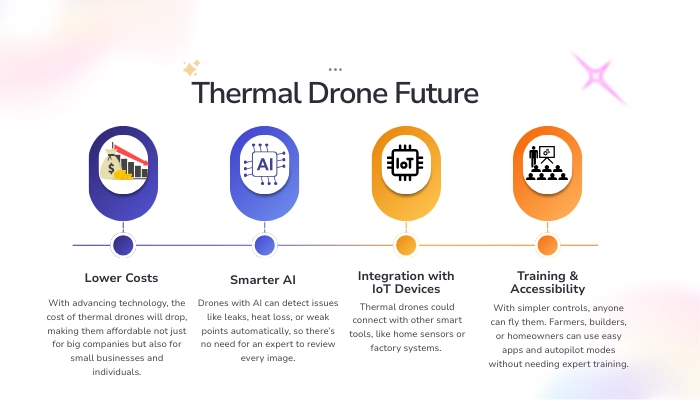
Thermal imaging drones are quickly moving from special tools to everyday helpers, thanks to better technology and easier access.
Lower Costs : As technology improves, these drones will become cheaper, so not only large companies but also small businesses and individuals can afford them.
Smarter AI :With built-in artificial intelligence, drones will spot problems on their own, like leaks, heat loss, or weak spots—without needing an expert to check every image.
Wider Uses : From checking crops on farms to finding insulation gaps in homes, these drones will be used in many fields beyond industry.
Sharper Results : Future models will give clearer thermal images, making it easier to notice even small changes in temperature and fix problems early.
Conclusion
A thermal imaging drone is more than just a flying camera, it’s a real problem solver. It helps us detect heat patterns, find issues faster, and make better decisions.
From saving lives in rescue missions to protecting homes and farms, these drones are changing the way we see the world. As technology grows, they will only become smarter, clearer, and more useful in everyday life.